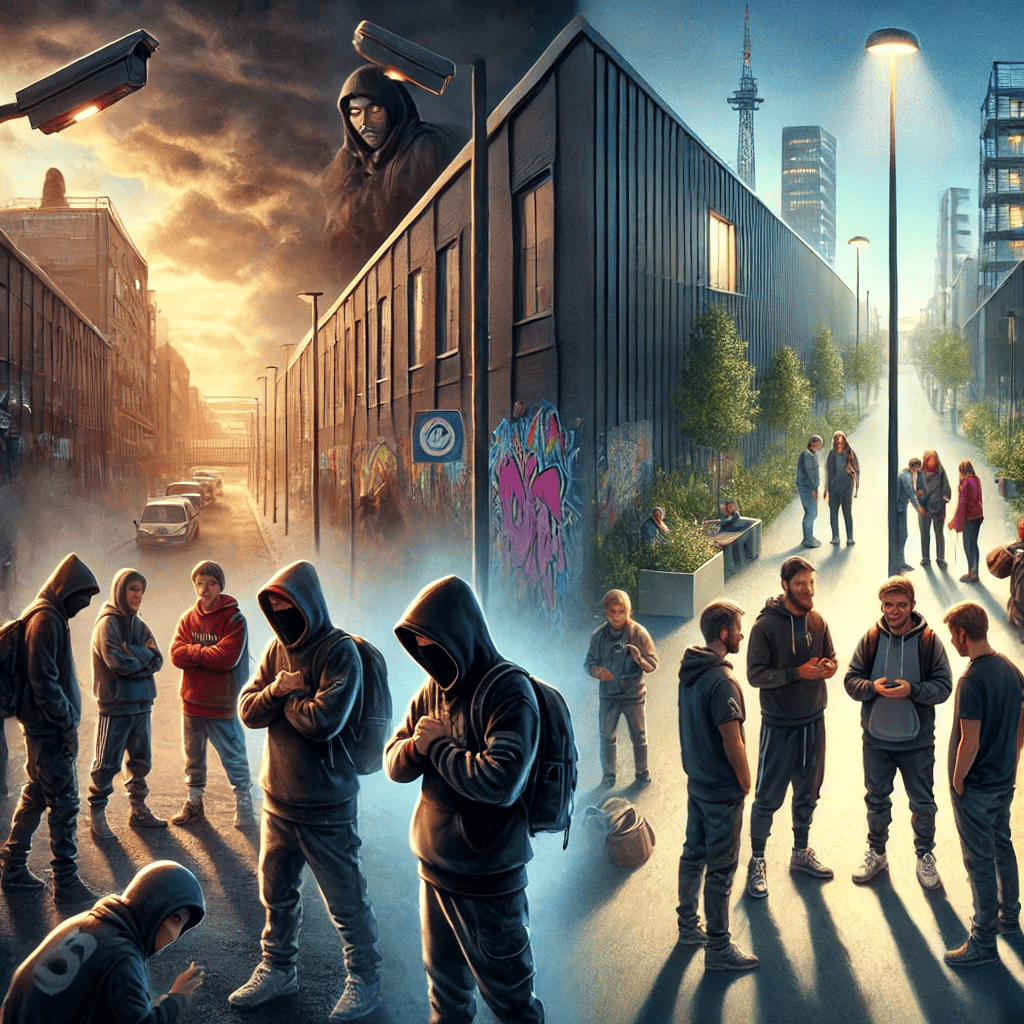

In Espoo, situations have recently been seen that raise concern – and not without reason. In Leppävaara, Matinkylä and elsewhere, unrest has emerged, and even if not everything is reported, that does not mean the problem is not real.
This is not just about isolated cases or a lack of oversight. Behind it lies a deeper phenomenon: young people’s ill-being. When a young person cannot find their place at school, at home or in hobbies, they begin to look for connection somewhere else. If the options are few, the street easily offers a role – and a group that accepts them.
What drives a young person to the street?
The reasons are varied, but the pattern is starting to be familiar. Home can be difficult, there is nothing to do, and many miss out on hobbies because of their price or accessibility. In schools, it is not always possible to notice things in time, and getting access to services can be difficult. If a young person’s background is from outside Finland, a language barrier and cultural cross-pressure may also come into play.
When some group offers a space where you can be part of something, it feels good – even if it is a gang whose direction is not constructive. Community is such a strong need that if it is not available in a constructive form, it is sought elsewhere.
This won’t be solved with the police alone
The role of the police is important, and their resources must be strengthened. But if we intervene only once a young person has already drifted into a cycle of crime, we are hopelessly late.
We need measures that carry before the situation gets out of hand:
-
places where a young person can be and be met
-
adults who see the young person as a whole – not as a problem
-
activities that are easy to take part in without labels or requirements
-
integration that also takes into account the challenges of the second and third generations
And in particular, one thing is needed that is missing from the current system:
mental health services must be opened also to young people who use substances.
At the moment, a young person who has both mental health and substance abuse problems can fall through the cracks – precisely when help would be most needed. If treatment starts only when use ends, we are already many steps too late.
Young people’s distress is a sign that we need to stop
If a young person cannot find their own place, it is not only about them – but about all of us. This is not only a security policy issue, but a message that not everything is in order.
We need honest discussion and practical solutions. Prevention is not a matter of ceremonial speeches – it is done where young people are: in everyday life, on the streets, in schools, in homes. Every young person should have the feeling that they are part of this society. If we do not offer it, someone else will – and not always in a good way.
- Espoo must be a city where everyone has the opportunity to build their life safely and with trust – regardless of background, situation or starting point.
Source: Uusi Suomi
Markku Arvekari
Digital Transformation Expert