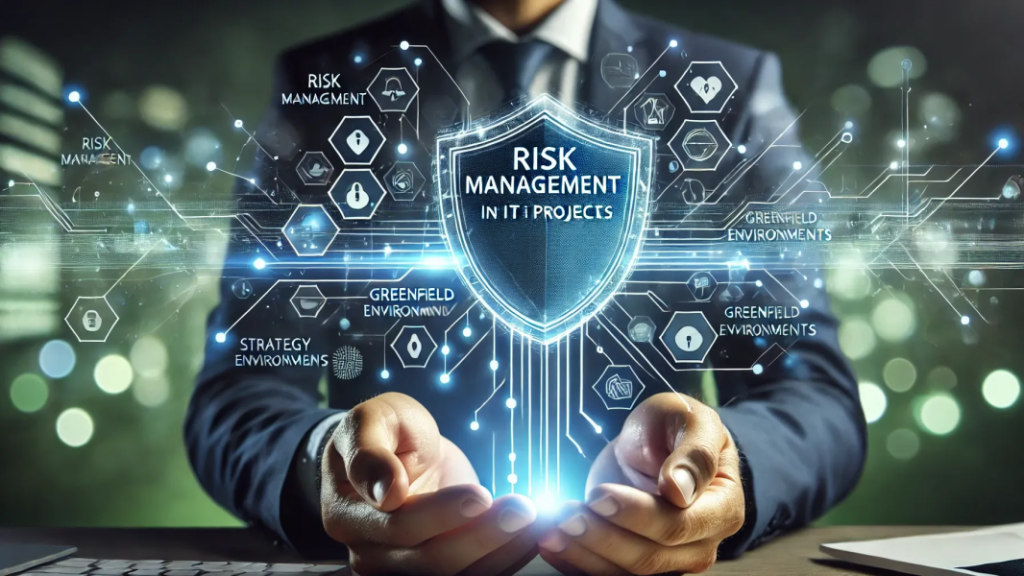
Greenfield IT projects, with their potential for innovation and the creation of new systems from scratch, offer significant opportunities for businesses. However, with great opportunity comes risk. The absence of legacy constraints in greenfield projects allows for creativity and flexibility, but it also introduces uncertainties that can jeopardize the success of the project. Effective risk management is crucial to navigating these uncertainties and ensuring that greenfield IT projects deliver their intended value. In this article, we’ll explore strategies for managing risk in greenfield IT projects to maximize success.
Understanding the Risks in Greenfield IT Projects
Greenfield projects, by nature, involve more unknowns than brownfield projects, where existing systems and processes guide development. Some of the common risks associated with greenfield IT projects include:
-
Scope Creep: The risk that the project’s scope expands beyond its original boundaries, leading to increased costs, extended timelines, and resource strain.
-
Budget Overruns: Unforeseen expenses can arise during the development of new systems, leading to budget overruns.
-
Timeline Delays: Without clear benchmarks or the constraints of existing systems, greenfield projects can suffer from delays if not carefully managed.
-
Technical Challenges: New technologies and untested solutions can introduce technical risks that may not be immediately apparent.
-
Stakeholder Misalignment: Diverging expectations among stakeholders can lead to conflicts and misalignment of project goals.
-
Security Vulnerabilities: Developing new systems from scratch introduces potential security vulnerabilities that need to be proactively managed.
Strategies for Effective Risk Management
-
Comprehensive Risk Assessment: Begin with a thorough risk assessment to identify potential challenges that could arise during the project. Engage all stakeholders, including IT, business, and external partners, to gather diverse perspectives on possible risks. Use tools like risk matrices to prioritize risks based on their likelihood and potential impact. This helps in focusing efforts on managing the most critical risks.
-
Clear Project Scope and Objectives: Define a clear and detailed project scope from the outset. This includes setting specific, measurable, achievable, relevant, and time-bound (SMART) objectives that guide the project. Regularly review the project scope to ensure it remains aligned with business goals and adjust as necessary to prevent scope creep.
-
Robust Budget Planning and Monitoring: Develop a detailed budget that accounts for all potential expenses, including contingencies for unexpected costs. This should include both direct costs (e.g., technology, personnel) and indirect costs (e.g., training, support). Implement continuous monitoring of the budget against actual spending to identify and address variances early.
-
Realistic Timeline Development: Establish a realistic timeline that accounts for potential delays and allows for flexibility. Include buffer periods within the timeline to accommodate unforeseen challenges. Use project management methodologies, such as Agile or PRINCE2, to maintain control over the timeline while allowing for iterative development and adjustments.
-
Stakeholder Engagement and Communication: Engage stakeholders throughout the project lifecycle to ensure alignment and manage expectations. Regular communication is key to addressing concerns and keeping everyone on the same page. Establish a clear communication plan that includes regular updates, milestone reports, and decision-making protocols to manage stakeholder relationships effectively.
-
Technical Feasibility and Prototyping: Before full-scale implementation, conduct feasibility studies and develop prototypes or proofs of concept (PoCs) to test new technologies and solutions. This helps in identifying technical risks early and allows for adjustments before committing significant resources. Involve technical experts to evaluate the proposed architecture and design, ensuring that it is robust and capable of scaling with the project.
-
Security and Compliance Planning: Incorporate security considerations from the beginning of the project. This includes conducting security risk assessments, implementing secure development practices, and planning for regular security audits. Ensure that the project complies with relevant regulations and standards, such as GDPR, HIPAA, or industry-specific guidelines. Regular compliance checks can prevent legal and financial repercussions.
-
Continuous Risk Monitoring and Adaptation: Risk management is an ongoing process. Continuously monitor identified risks and be vigilant for new risks that may emerge as the project progresses. Adapt risk management strategies as needed, using lessons learned from earlier phases of the project to improve risk mitigation in subsequent stages.
Conclusion: Navigating the Risks of Greenfield IT Projects
While greenfield IT projects offer unparalleled opportunities for innovation and growth, they also come with inherent risks. By implementing robust risk management strategies—such as thorough risk assessments, clear scope definitions, realistic timelines, stakeholder engagement, and proactive security planning—organizations can navigate these risks effectively and set their greenfield projects up for success.

Markku Arvekari
Digital Transformation Expert