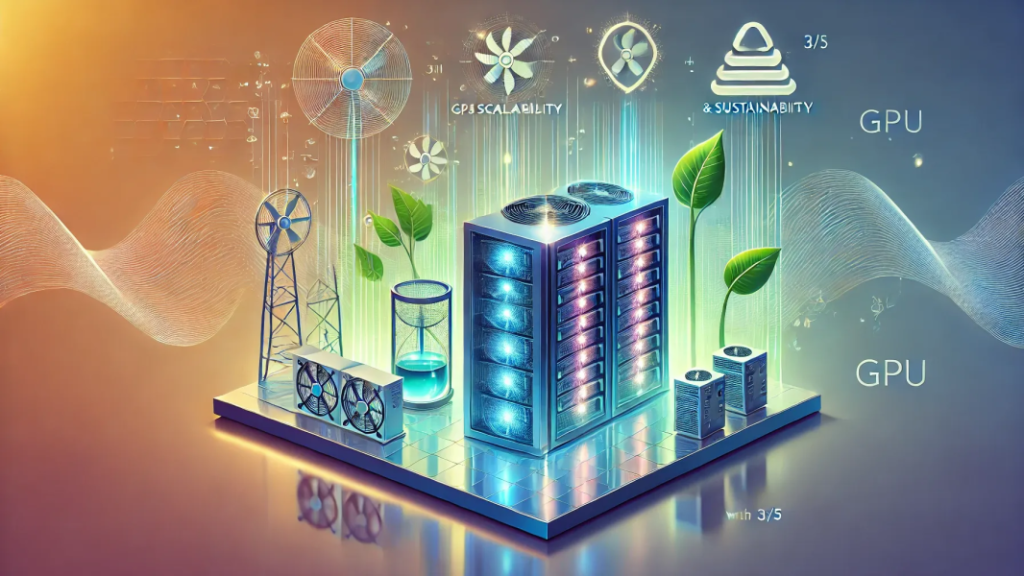
The journey to modern AI scalability often begins in the unlikeliest of places: a legacy data center. For organizations relying on facilities built decades ago, the task of transforming them to support GPU-intensive workloads is a complex yet rewarding challenge. This article dives deeper into what it takes to retrofit an existing data center, moving beyond the foundational principles discussed earlier and exploring how to leverage legacy assets for future-ready infrastructure.
The Untapped Potential of Legacy Facilities
Many legacy data centers hold untapped potential. While initially designed for simpler workloads, these facilities often occupy strategic locations with strong connectivity and proximity to users—advantages that can’t be easily replicated with new builds. The key to unlocking this potential lies in a strategic retrofit plan, balancing operational needs, sustainability goals, and cost considerations.
For example, a European financial institution recently retrofitted its 1980s-era facility to support AI-driven fraud detection. While initial assessments revealed limitations in cooling and power, the institution’s proximity to renewable energy sources and existing fiber connections made retrofitting more viable than starting fresh.
Power Infrastructure: Moving Beyond Capacity Upgrades
Retrofitting a legacy data center’s power system involves more than just upgrading capacity—it’s about creating flexibility and resilience for the future. For GPU-intensive workloads, dynamic power distribution becomes critical. Advanced power delivery units (PDUs) with built-in monitoring and adaptive controls can allocate power efficiently across high-density racks, minimizing wastage.
Additionally, organizations can incorporate on-site energy storage, such as lithium-ion battery systems, to manage peak loads and improve energy efficiency. By pairing these systems with renewable energy sources, legacy facilities can achieve energy independence during peak usage periods, reducing both operational costs and carbon footprints.
Cooling: Advanced Techniques for Retrofitting
Cooling innovations are at the forefront of transforming legacy data centers. While earlier discussions highlighted liquid cooling and immersion cooling, retrofitting projects must address unique constraints like structural limitations or airflow bottlenecks.
-
Thermal Zoning: In retrofits, implementing thermal zones allows different parts of the facility to operate at optimized temperatures. For instance, high-density GPU clusters can utilize liquid cooling, while less demanding areas rely on existing air-cooling systems.
-
Edge Integration: By installing modular, edge cooling units near GPU racks, organizations can reduce the strain on centralized systems. These units provide localized cooling and can be added incrementally, offering scalability without overhauling the entire HVAC system.
-
AI-Driven Cooling Management: AI tools can dynamically adjust cooling systems based on real-time workload demands and external temperature conditions, achieving greater energy efficiency. These tools integrate with existing building management systems (BMS), providing predictive insights and reducing downtime risks.
Heat Reuse: Beyond District Heating
In previous articles, we touched on the potential of heat reuse for district heating and agriculture. Retrofitted facilities can take this further by exploring partnerships with industries requiring steady, low-grade heat sources.
-
Data-Driven Manufacturing: Industries like pharmaceutical production and material drying require consistent heat levels. Retrofitted data centers can supply this heat, creating a new revenue stream.
-
Energy Sharing Grids: Partnering with regional energy grids allows facilities to transfer excess heat to other commercial entities or even power adjacent small-scale data centers.
These advanced applications not only reduce waste but also open opportunities for facilities to monetize sustainability, creating a win-win scenario.
Beyond Retrofitting: Digital Twin Integration
One innovative approach to retrofitting involves leveraging digital twin technology. By creating a virtual replica of the data center, operators can simulate the effects of different upgrades, from power infrastructure changes to cooling configurations. This allows for precise planning and minimizes disruptions during implementation.
Digital twins also enable predictive maintenance by identifying potential failures before they occur. For legacy facilities, where downtime can be particularly costly, this proactive approach ensures that systems remain operational even during large-scale retrofits.
Sustainability Metrics: New Ways to Measure Success
Earlier articles discussed metrics like Power Usage Effectiveness (PUE) and Carbon Usage Effectiveness (CUE). Retrofitted facilities can expand their sustainability reporting by incorporating advanced metrics:
-
Energy Reuse Effectiveness (ERE): Measures how effectively waste heat is repurposed within or outside the facility. Facilities achieving an ERE below 0.5 demonstrate world-class efficiency in heat reuse.
-
Resource Usage Effectiveness (RUE): Tracks the use of non-energy resources, such as water for cooling. By retrofitting with closed-loop liquid cooling systems, facilities can achieve dramatic reductions in water usage.
These metrics not only improve operational transparency but also align retrofitted facilities with ESG goals, building investor and stakeholder confidence.
Balancing Cost and Scalability
One of the biggest challenges in retrofitting is balancing the cost of upgrades with scalability needs. Organizations can mitigate financial risks by adopting phased retrofitting strategies:
-
Phase 1: High-Impact Upgrades Focus on immediate needs, such as power systems and localized cooling units, to support current workloads.
-
Phase 2: Sustainability Enhancements Incorporate renewable energy integration and advanced heat reuse systems for long-term environmental impact.
-
Phase 3: Future-Proofing Use digital twins and AI-driven management systems to ensure the facility can scale with evolving demands.
By approaching retrofits in stages, organizations can spread costs over time and adapt their plans as technologies advance.
Conclusion: The Strategic Advantage of Retrofitting
Retrofitting legacy data centers offers more than just a way to keep pace with AI scalability—it’s an opportunity to reimagine infrastructure with sustainability and innovation at its core. By moving beyond capacity upgrades, adopting advanced cooling techniques, and embracing digital twin technology, organizations can unlock the full potential of their facilities.
For those ready to take the leap, retrofitting is not just about adapting to the future—it’s about shaping it.

Markku Arvekari
Digital Transformation Expert