In Espoo, there is a lot of talk about participation. Over the years, the city has had various surveys, online services, forums, and participatory budgeting pilots. But more and more Espoo residents are rightly asking: is this influence – or pseudo-democracy?
The forums were discontinued – but what replaced them?
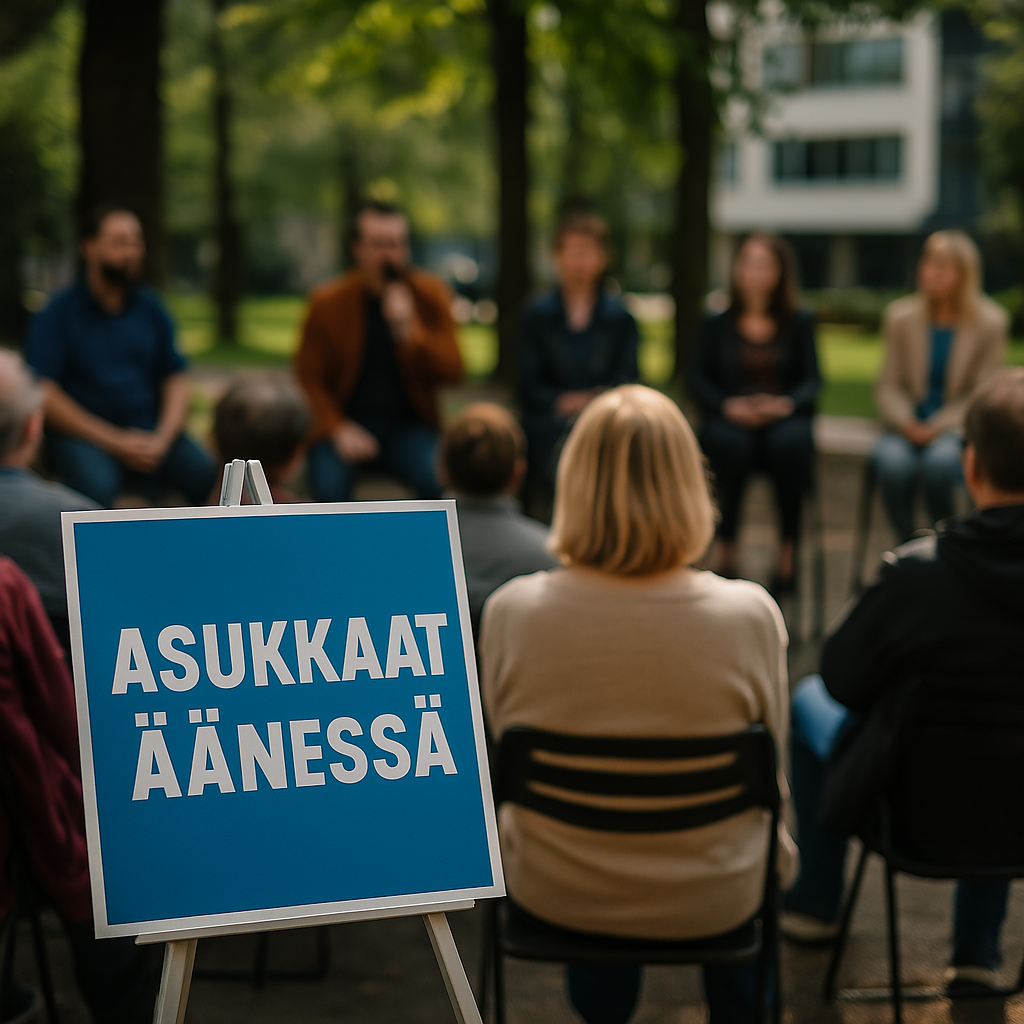
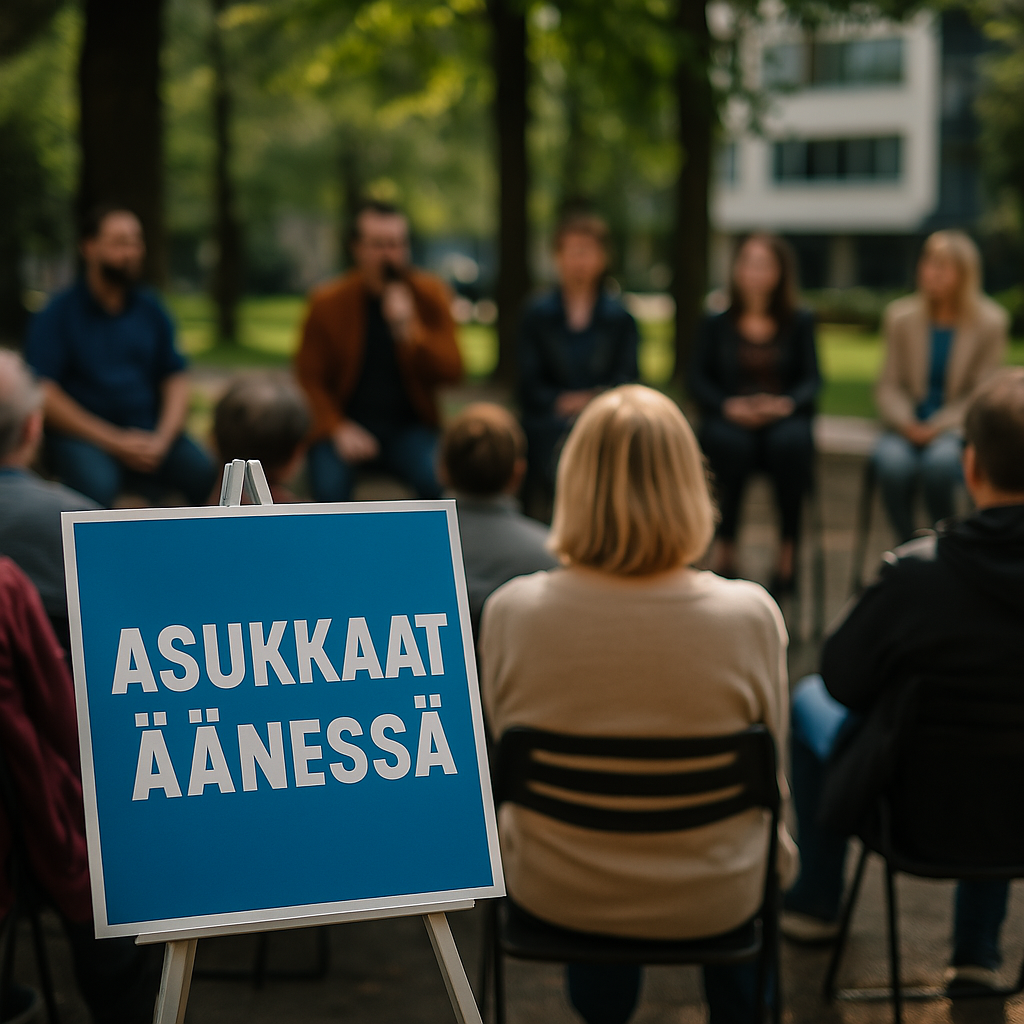
Espoo’s resident forums, where residents had the opportunity to meet decision-makers and discuss issues concerning their area, were discontinued by a city decision in spring 2022. They were replaced by a new participation model, intended to enhance and broaden influence through various means.
At a practical level, many now feel they have been left even more on the outside. The new models are fragmented and technical, and the ordinary resident has no clear visibility into where and when decisions can be influenced – or whether their opinion affects anything at all.
Residents’ opportunities to influence are often merely cosmetic transparency. Even though survey responses are entered into online services and feedback is collected, it feels as if decisions are made in civil service preparation and political negotiating rooms long before citizens are given even an apparent opportunity to have their say. This is a major problem especially when it comes to zoning, service networks, or other significant regional solutions.
Many residents feel they are only directed to follow a finished proposal – not to participate in drafting it. This can be compared to being able to choose between two pre-designed solutions even though neither matches your view. This is not a genuine opportunity to influence, but an illusion of influence.
Successful models in other cities
Several Finnish cities have introduced participatory budgeting models that have increased residents’ opportunities to influence and improved trust in decision-making.
In 2018, Helsinki launched a participatory budgeting process called OmaStadi. In the first round, the city allocated 4.4 million euros to implement residents’ proposals. The process consisted of four stages: residents made proposals, city experts evaluated them, residents voted for their favorites, and the city implemented the projects that received the most votes. This model has increased residents’ participation and improved interaction between the city and residents.
In Tampere, the OmaTesoma project was carried out in 2014, in which residents of the Tesoma area got to decide on an appropriation of 110,000 euros to develop their area. This project increased community spirit and residents’ satisfaction with the city’s decision-making.
In the municipality of Janakkala, participatory budgeting has been in use since 2019. The municipality allocates 50,000 euros annually to implement residents’ ideas. This has activated residents to participate and increased their opportunities to influence the development of their own area.
What about Espoo – why doesn’t the copy work like the original?
Espoo has sought to adopt a participatory budgeting model inspired by other cities, but residents’ experience in Espoo has been mixed. Although the city has had pilots and forms of participatory budgeting, residents have repeatedly felt that their opportunities to influence are minimal or even merely apparent.
Many feel that proposals can indeed be submitted and ideas are collected, but they disappear into the system – without real feedback or implementation. Transparency in decision-making often remains insufficient: why a proposal was not implemented, or why another one passed it by, is not properly explained.
Unlike in Helsinki, where the OmaStadi model is taken seriously and communication is active, in Espoo participation is experienced as detached, difficult to understand, and superficial. In this way, even a good idea loses its power.
If participatory budgeting is to work in Espoo, it must be done on residents’ terms, not merely driven by the needs of communications or administration.
How is this fixed?
Espoo can be a forerunner in democracy as well, if that is what is wanted. It requires practical changes:
-
Participation must be brought to the beginning of the preparation, not only to the final stage of the decision.
-
The handling of feedback and its impacts must be reported publicly. Preferably in an understandable way and without bureaucratic jargon.
-
Develop practices together with residents, not solely as civil service work or with a technology-driven approach.
-
Introduce a participatory budgeting model in which residents can genuinely influence the city’s use of funds.
The most important thing is to make participation everyday, low-threshold activity. An Espoo resident must know where they can influence and how – and they must see concretely that the influence is real.
Change begins with the courage to listen
Espoo is growing rapidly, and along with it the challenges of decision-making are also growing. But if residents do not feel they are part of building the city’s future, we are building a society in which indifference and frustration prevail.
A city is not built from the top down but from the bottom up. That means decision-making must be grounded in trust, openness, and genuine cooperation.
Espoo has every opportunity to be an open, interactive, and agile city – if only the will can be found.
Source: Uusi Suomi
Markku Arvekari
Digital Transformation Expert