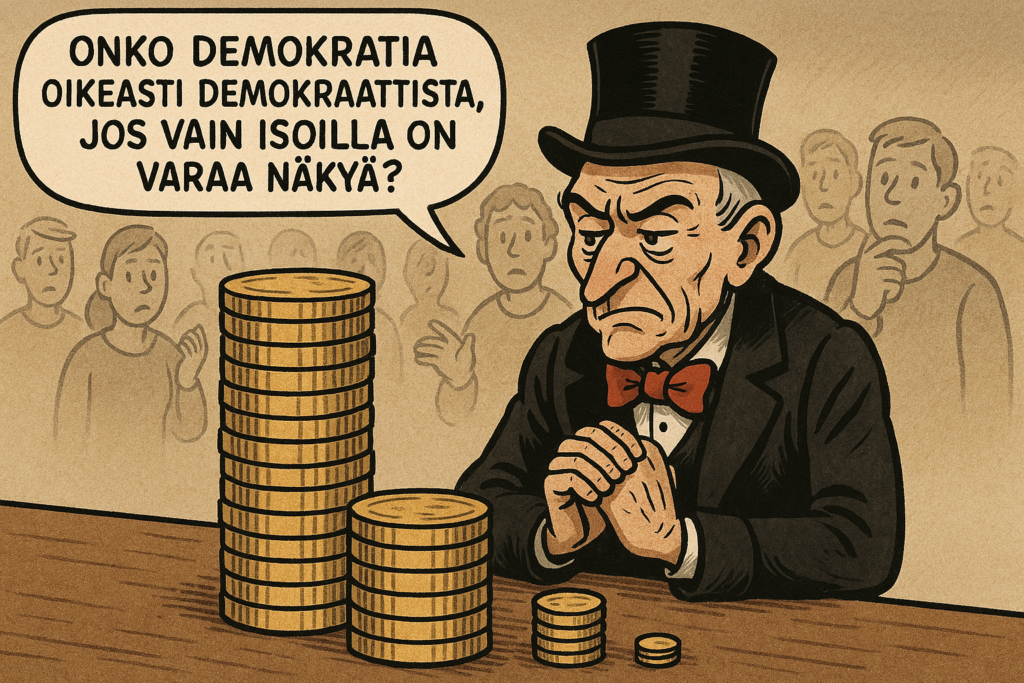
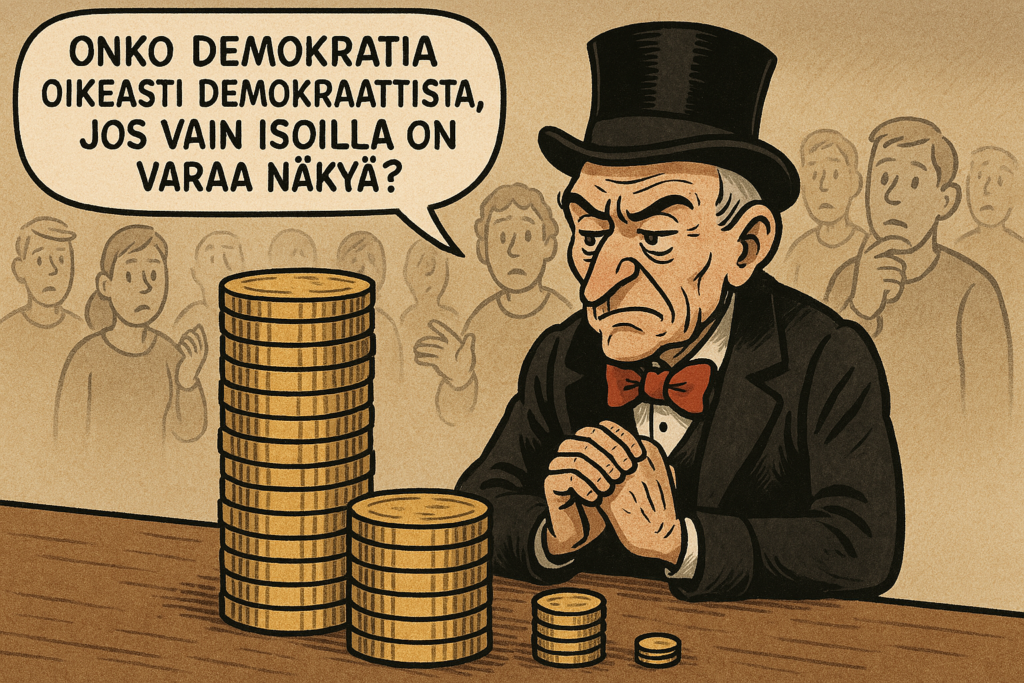
In Finland, party funding is distributed to parties according to how many members of parliament they manage to get elected to Parliament. In practice, this means that parties that do not have a single MP are left completely without party funding. This is, of course, clear and simple, but it inevitably raises the question: is it fair? Does this system really promote the development of democracy and political competition?
In the current situation, party funding benefits above all those parties that are already large, well-known, and established. They receive significant sums from the state, which they can use to improve visibility, campaign, and maintain their operations. This creates a cycle in which large parties remain large because they have the resources to be constantly in the spotlight, while new or small parties have no chance whatsoever to get on the same level.
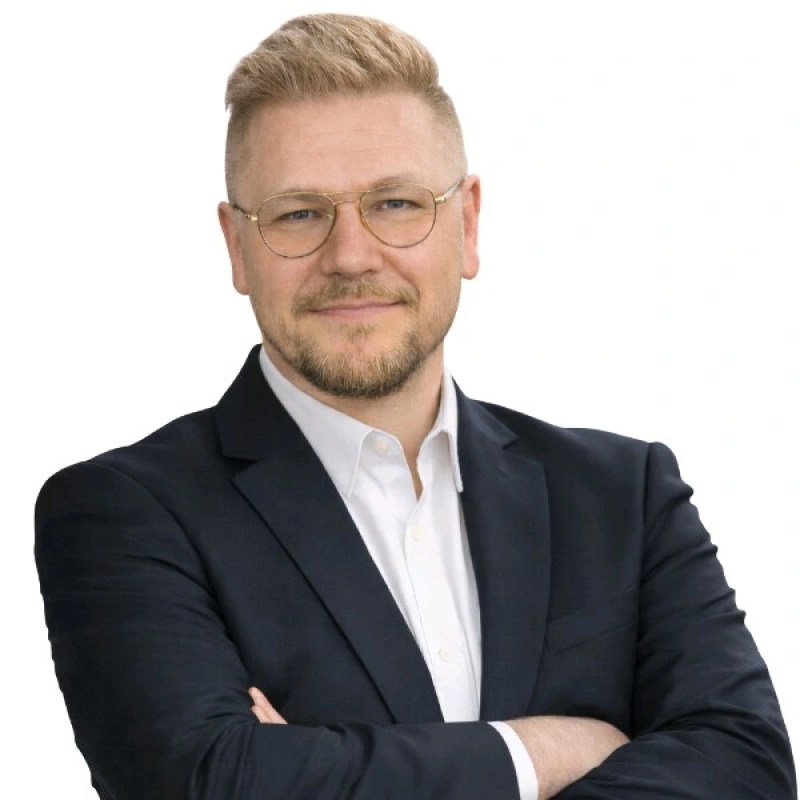
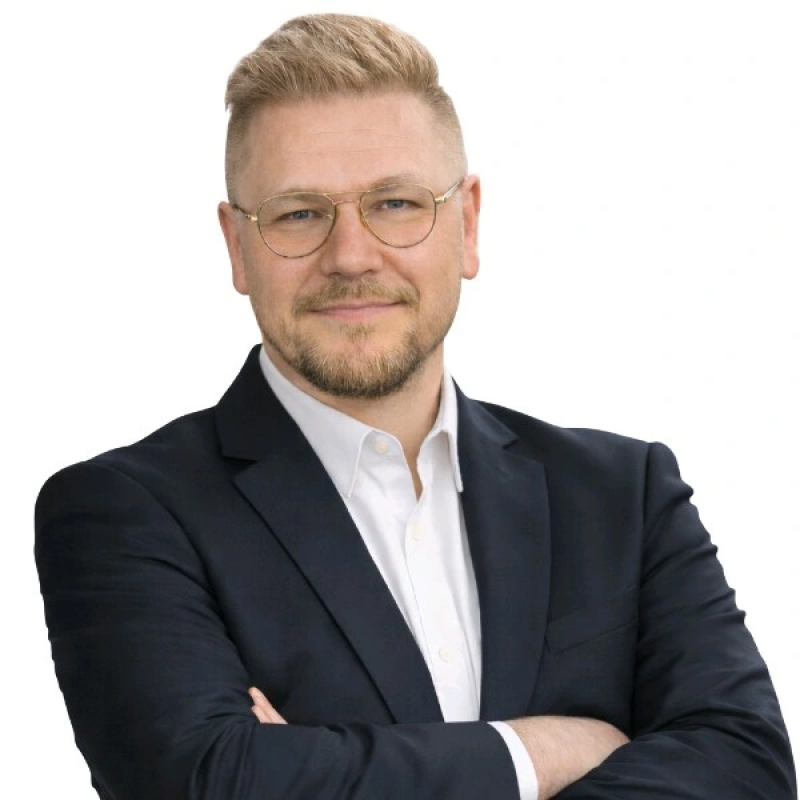
I have thought about this issue also through my own experience. I joined Liike Nyt precisely because I wanted to find an alternative to the traditional parties. I saw an opportunity to create a new kind of politics that is not based on old power machines or structures. But right at the beginning it became clear that without the financial resources that big parties automatically enjoy, building alternatives and making them visible is really difficult.
Democracy must not depend on money
It is completely understandable that the state has to regulate somehow how and on what grounds party funding is distributed. But is this current way the only right one? I do not believe so. On the contrary, the current model keeps us stuck in old structures, and it does not, in reality, make room for new ideas and alternatives. At the core of democracy there should always be fair competition, where everyone genuinely has the opportunity to be seen and heard – regardless of whether a party belongs to the current power bloc or not.
If we think about how democracy works at its best, it is precisely when people have choices and when different opinions and ideas can be brought forward openly. But in the current situation, offering alternatives is difficult if financial resources are nowhere near equal. A party’s visibility should not depend solely on how many MPs the party got in the last elections – especially when we know that many parties have started very small and later grown into significant players.
A concrete proposal for a new model
So how could we bring about change in the situation? One realistic and easily implementable solution would be to set both an upper limit and a minimum amount for party funding. This would mean that every registered party that has at least a certain number of members and active operations would receive basic funding that would allow the party to carry out at least some kind of visible campaign.
At the same time, it would be justified to set an upper limit on how large a share of the total party funding pot can go to a single party. This way we could prevent big parties from being able to dominate the political field solely with their economic power. Such a model would increase fairness, encourage new political initiatives, and significantly diversify political debate.
It is also good to remember that this would not automatically mean that everyone would receive the same amount of money – but rather that every party would receive enough so that they can be heard and seen. It would not only be more just, but also genuinely beneficial for democracy, because people would be better able to learn about new alternatives and different perspectives.
In a democracy, there must be room for new ideas and people
I strongly believe that the renewal of society always starts from people having real alternatives and the opportunity to make different choices. This applies equally to politics. When new parties and movements get even some kind of chance to come forward, it increases the diversity of society and also people’s interest in politics. Now many people skip politics altogether precisely because they feel that there are no alternatives – or that the current system favors only those who already have power and status.
Unfortunately, the current party funding system does not promote the renewal of democracy, but on the contrary acts as an obstacle. It is time for us to rethink this, to create a system that is genuinely fair and open to all parties and political movements. Democracy must not depend on money, and new ideas should not be drowned out because they cannot afford to be visible.
Espoo and all of Finland deserve a better democracy. One in which every party and candidate – large or small – can genuinely be heard and seen. Now is the time to take a step in that direction.
Source: Uusi Suomi
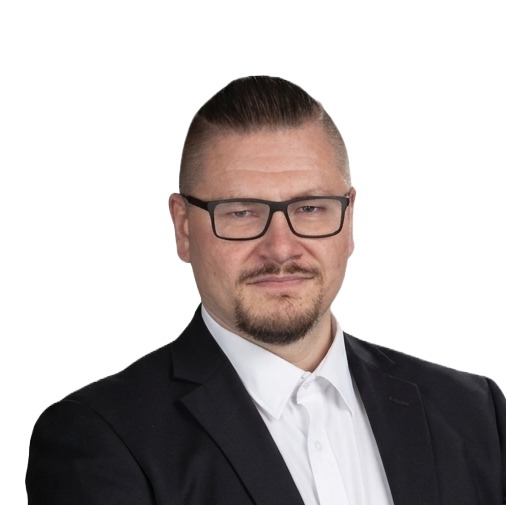
Markku Arvekari
Digital Transformation Expert