Introduction: Building Something Real
When we talk about local AI, it’s easy to stay in test mode. Run a model, throw some prompts at it, compare answers. But the real value starts when you begin connecting it to your work. When your local model becomes a small part of your actual workflow.
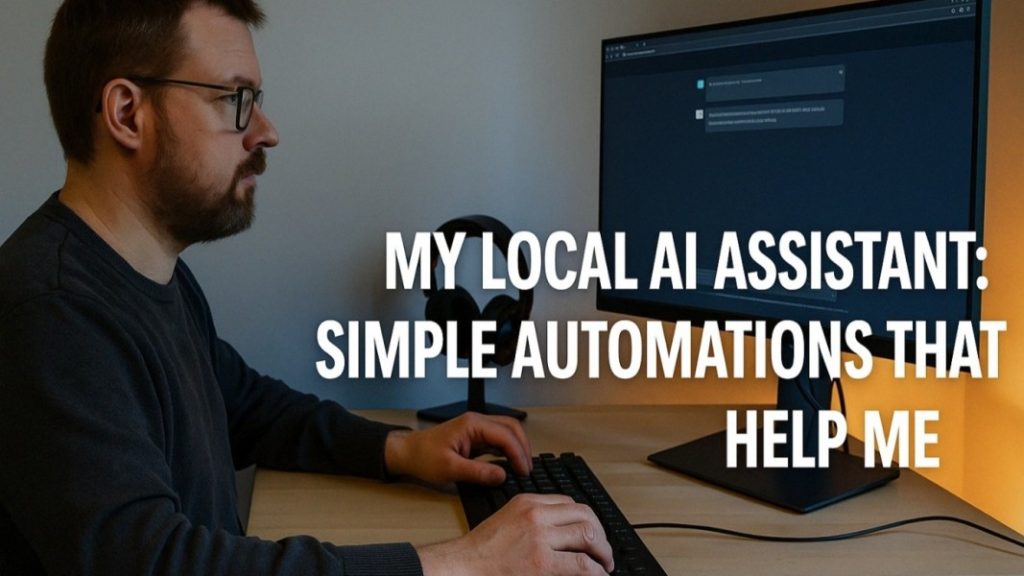
That’s where things started to shift for me. In this article, I’ll explain how I built a lightweight but effective AI assistant. It helps me handle vulnerability data, sort it, and highlight what matters based on the technologies I actually use. It’s not fancy. It doesn’t talk back. But it saves me time and improves focus. That’s the point.
The Problem I Needed to Solve
I work with cybersecurity-related information from many different sources. Some of it comes from threat feeds. Some from online reports. Some in plain text, others in long, structured documents. The challenge is always the same: find what’s relevant to me, and do it fast.
So I started to sketch a process. I collect data from a few known sources, then use a local model to:
-
Extract what’s important.
-
Organize it by how severe the vulnerabilities are.
-
Highlight the ones related to my own systems and applications.
Instead of reading everything manually, I now get a focused view of what needs my attention. That alone changes how I handle the day.
How I Built It
This assistant runs locally. I don’t use the cloud for any part of it. Right now, I operate it inside my test environment, using LM Studio and models like DeepSeek or BOLT.
The process is simple. I paste the vulnerability data into the interface and give it a task like:
“Summarize the vulnerabilities by severity. Only include the ones that mention these systems or applications.”
Even though it’s a straightforward process, I’ve tried to automate as much as possible.
To do that, I use n8n to build workflows that control the data flow between different steps. It lets me trigger actions based on new input, format and send data to the model, and handle the responses without needing to do manual steps.
Within seconds, I get a structured output. Short, direct, and filtered. Often it picks up on links or issues I might have missed. And because nothing leaves my machine, I don’t have to worry about pasting sensitive content into a third-party tool.
Within seconds, I get a structured output. Short, direct, and filtered. Often it picks up on links or issues I might have missed. And because nothing leaves my machine, I don’t have to worry about pasting sensitive content into a third-party tool.
Triggering and Workflow Planning
Right now, I use keyboard input to trigger the assistant. I’ve tested voice activation, but it doesn’t fit my setup yet. It’s too inconsistent.
Later, when I’ve finished setting up my new desktop, I plan to integrate low-code automation tools like n8n. That way, I can:
-
Pull input from documents or data feeds automatically.
-
Send that input to the local model.
-
Push the result into a summary, a file, or even an email to myself.
This kind of flow won’t require manual copying or pasting. It could run on a schedule or be triggered by incoming files. That’s where I want to go next.
Why I Think It Matters
This isn’t about building a product. It’s about showing how even a small, focused tool can make real difference in your daily work. A local assistant like this can help you stay ahead of your tasks, spot what matters, and save you from wasting energy.
That’s the part that gets interesting. Once it works, your thinking expands. You start wondering what else it could help with. Maybe writing proposals. Reviewing code. Drafting emails. Creating meeting notes. Even internal support.
And the best part? You don’t need the cloud. You don’t need licenses. It’s yours. It runs quietly in the background. It answers when you ask.
Final Thoughts
If you’re getting into local AI, this is a good step to try. Build something, even if it’s basic. Even if it breaks now and then. The process of connecting a model to your own work teaches you more than any tutorial.
And when it starts saving you time, even in small ways, you’ll know it’s worth it.
In the final article, I’ll pull the full picture together — where local AI is going and why I believe personal ownership of your tools is becoming more important than ever.

Markku Arvekari
Digital Transformation Expert