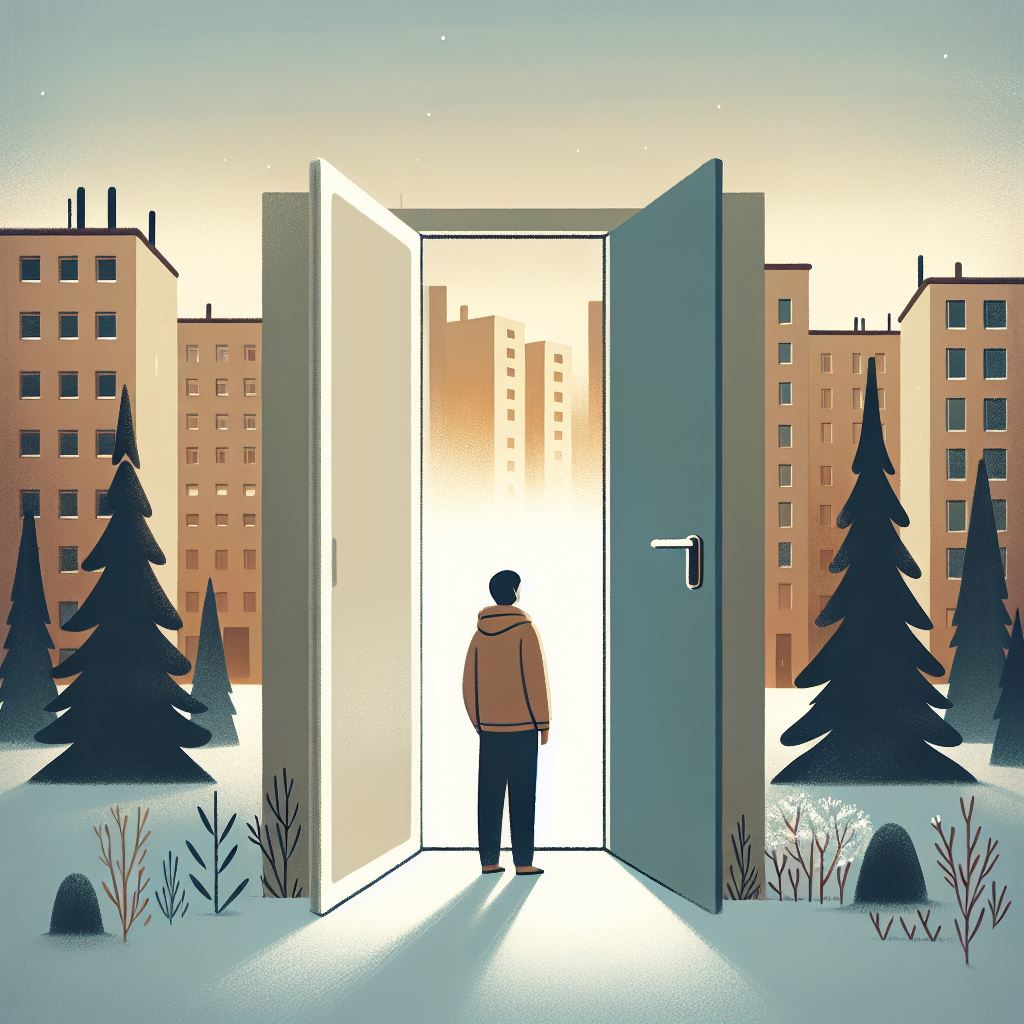
Integration is not merely an administrative measure – it is human life, uncertainty, and constant proving. In this piece, through my own family’s experience, I describe how Finland treats those who would like to be part of society but whom the system refuses to let in. This is not only about immigration, but about the values with which we build this country: do we reject or support, do we exclude or invite in?
An individual’s story in the jaws of the system
When immigration and integration are discussed, the conversation often gets stuck on numbers, regulations, and the technical details of the asylum process. People are talked about less often. Even less often those who would like to be part of society, but whom the system refuses to let in, even as years go by and life is built here.
I have been married for seven years. My wife has lived in Finland for almost ten years. She came to the country as an asylum seeker from a life-threatening situation in Iraq, where her life would genuinely have been in danger if she had stayed. Now she goes to work and pays taxes. In Finland she completed a vocational qualification in business (merkonomi) and attained a marketing manager position, which she lost during the COVID-19 pandemic. After that she has no longer been able to get into similar roles, but now works as a customer service employee at IKEA.
Yet her citizenship application has been rejected because the Finnish Immigration Service does not consider her identity to be sufficiently proven, even though she has had the same identity the whole time, even though I have met her parents, and even though an appeal has been lodged with the Administrative Court.
A structure that does not support but obstructs
This is not an isolated case. This is a systemic problem. In Finland, integration is not sufficiently supported, and the system seems to be built more to reject than to receive. The authorities have power, but not responsibility. At worst, they make decisions that, in my view, are in conflict with the case law of the European Court of Human Rights.
When a person has been in the country for almost a decade, built a life here, a family and a career, you can no longer talk about a detached immigrant. It is about a member of society who nevertheless lives in a state of uncertainty, without full security and acceptance. And still we wonder why some people do not feel they belong to this country, even though they have done everything right.
Responsibility cannot rest only with the individual
Integration is not solely the individual’s responsibility. It is also the system’s responsibility. If we do not provide support, pathways and a genuine opportunity to succeed, we cannot expect perfect adaptation either. How many Finns would endure years of uncertainty, constant proving and structural suspicion, even if they themselves had done their best?
We teach Finnish to people, but often the teachers are individuals who do not properly know Finnish themselves. Migri operates partly under political pressure, and its decisions are not properly overseen. Immigrants are not clearly informed about their rights or appeals. The existence of appeal routes does not help if people do not know they exist or cannot use them.
A society cannot be built on exclusion
The breakdown of trust
All of this increases distrust in the system, not only among immigrants but also among the native population. When people see that a working and integrated person does not receive citizenship in a decade, the question arises: what is sufficient? If nothing is enough, why even try?
As a result, gaps and bitterness emerge. We risk creating generations who do not experience Finland as their homeland, even though they were born here or spent their entire youth here. That is a socially dangerous path.
Not unlimited, but fair
I am not saying that immigration should be unlimited. Of course not. I myself believe that background checks must be thorough and that society’s resources must be used sensibly. But that does not mean human dignity is forgotten. There is no point in taking people in if we do not actually want them to be part of society.
In my view, good immigration policy is rational, safe and fair. It takes Finland’s carrying capacity into account, but does not reduce people to mere administrative numbers. The difference between, for example, asylum seekers, work-based immigrants and family reunification must be made clear. Each of these has its own justification and significance.
Toward solutions
I have myself proposed a model in which progress in integration would be measured by the right things. We talk about participation, employment and language skills, but in practice these are not monitored in a sensible way. A monitoring program that would enable individual progress would serve both the newcomer and society.
In addition, the system needs reorganization. The operations of the Finnish Immigration Service should be assessed externally and a more open, clearer and faster way of processing applications should be built. At present Migri is not an actor that inspires anyone’s trust, neither from the applicant’s perspective nor from the authority’s.
Municipalities should also have more responsibility and power in integration. The municipality knows the needs of its own area and can provide faster and more personal support than a centralized authority. At the same time, regional solutions can be built that support the vitality of that particular locality.
A choice that reflects values
Immigration is not a threat if it is approached responsibly. It can be an opportunity if we build a system that supports both the newcomer and society. But if we leave people alone, without clear answers and support, we betray both them and ourselves.
That is why this discussion is not only about individual cases. It is about the values by which we operate as a society. Do we treat every individual as valuable, or do we let the system decide who is welcome and who is not, without transparency and justice?
It is time for us to change how we treat those who would like to be part of this society. We need to build a system in which everyone is given a fair chance. A system in which people are not crushed under bureaucracy, in which goodwill does not turn into frustration and in which society shows that it values everyone who wants to participate.
This is not only about immigrants. This is about all of us. What kind of society do we want to build? A society in which people can feel safe, heard and valued, or a society in which some people live in the shadows, without a voice or worth?
I choose the first. That is why I write. That is why I want to make an impact. And that is why I also invite you, the reader, to see the person, not just the papers.
Source: Uusi Suomi
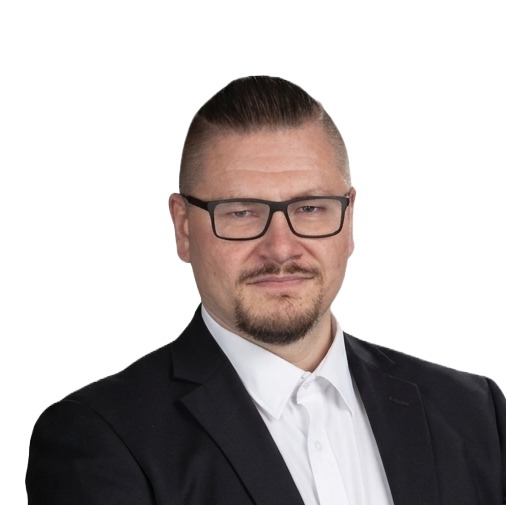
Markku Arvekari
Digital Transformation Expert