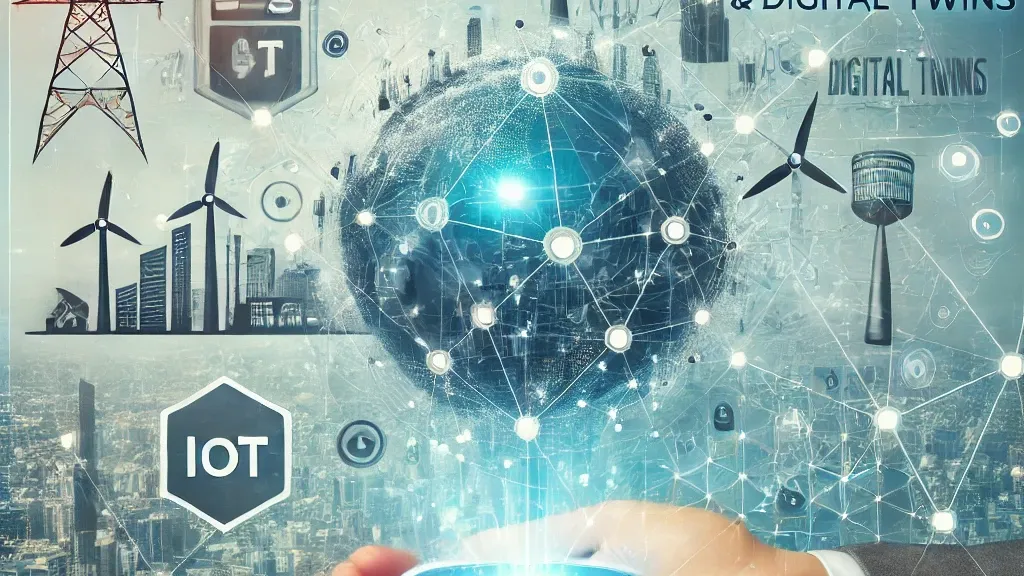
Combining digitalisation and sustainable development is no longer an option, but a necessity. Technologies such as IoT (Internet of Things), OT (Operational Technology) and artificial intelligence offer the opportunity to collect and leverage data in a way that not only optimises business, but also reduces environmental impacts. But how do cloud-based AI tools change this process, and what practical benefits can companies achieve?
IoT and OT – digitising the physical world
IoT devices and OT systems act as a bridge between the physical and digital worlds. For example:
-
Sensors can measure energy consumption, air quality and temperature.
-
Smart electricity meters can optimise energy use and detect anomalies.
-
Cameras and RFID readers enhance logistics and production processes.
When these technologies are combined with AI and cloud services, they create systems capable of predicting and optimising operations in real time.
The role of cloud-based AI – transforming data to support decision-making
IoT devices collect vast amounts of data, but raw data in itself is not valuable without the right tools to analyse it. Cloud-based AI solutions, such as Azure AI, AWS SageMaker and Google AI, enable real-time processing and utilisation of data. Practical examples:
-
Energy sector: AI can analyse buildings’ energy consumption and proactively adjust ventilation and heating based on weather conditions and occupancy rates.
-
Industry: Sensor data from a production line can detect anomalies and predict equipment maintenance needs before failure.
-
Logistics: Transport routes can be optimised based on weather conditions, traffic data and previous delivery delays.
CO₂ emissions tracking and HVAC optimisation
AI and IoT can also directly affect companies’ environmental footprint:
-
Indoor air quality sensors measure CO₂ concentrations and control ventilation as needed, reducing unnecessary energy consumption.
-
Smart building systems can combine IoT data and AI to optimise energy use without affecting comfort.
-
CO₂ emissions tracking can be integrated directly into a company’s ESG reporting and help identify concrete ways to reduce emissions.
For example, large office buildings can use AI to reduce ventilation energy consumption by up to 30 % when HVAC is adjusted automatically based on space occupancy and external factors.
Entity-based digital twins in improving information management
Effective information management and classification require more than just collecting and analysing data. An entity-based digital twin creates a comprehensive model of how information relates to different processes, systems and areas of the business. This enables:
-
Better structuring and combining of data, allowing IoT- and AI-based analyses to leverage more accurate and contextually relevant data.
-
Optimised information management, where data does not remain in individual silos, but is combined into a broader whole.
-
Automatic data classification and relationship management, which supports, for example, ESG reporting and sustainability strategies.
When companies adopt an entity-based digital twin, they can refine data management, improve analytics and automate decision-making in a way that reduces unnecessary manual work and increases business scalability.
Predictive analytics and automation – AI predicts and guides
Once data has been collected and cleansed, AI can use it to make predictions and automate operations:
-
In industry, AI can predict machine failures and schedule maintenance optimally.
-
In construction, energy management systems can adjust space temperature, ventilation and lighting based on occupancy and external conditions.
-
CO₂ emissions tracking can be linked to a company’s strategic decisions and investments, helping to develop even more responsible business models.
The future – IoT, AI and cloud services as engines of sustainable development
Companies that are only now taking their first steps in leveraging AI and IoT will soon find themselves in a situation where these technologies are no longer a competitive advantage, but a prerequisite for doing business. Cloud-based solutions enable scalability and continuous development, but they also require companies to have the right strategy and investments.
-
Optimise energy use and reduce emissions – with AI, better decisions can be made while also saving costs.
-
Automate processes – frees up resources for more important tasks and improves efficiency.
-
Develop predictive strategies – AI and data analytics enable solving problems before they occur.
Summary
IoT and AI are no longer just experiments – they are already in use across many industries to improve efficiency, reduce costs and decrease environmental impacts. An entity-based digital twin brings a new level to information management, enabling more precise classification and relationship management. The key is knowing how to leverage data and integrate it into business decision-making in the right way.
Would you like to discuss how your company could leverage IoT and AI to build a more sustainable and efficient business? Leave a comment or get in touch!
#IoT #AI #SustainableDevelopment #CloudServices #DigitalTransformation #Innovation #EnergyEfficiency #DigitalTwin

Markku Arvekari
Digital Transformation Expert