

Public administration is not some neutral machine; it is a wielder of power whose actions affect people’s everyday lives every day. Too often decisions are delayed, responsibilities disappear, and information doesn’t flow. We have a system that not only bogs down, but also produces unnecessary work, uncertainty and unfairness. In this piece I go through why the current administration needs shaking up, and what should be done so that bureaucracy once again becomes a system that serves people, not an obstacle to them.
The foundation of trust is found in the smoothness of everyday life
Administration as an obstacle in everyday life or an enabler?
Good governance is not just shuffling papers or strict compliance with the rules of procedure. It is making people’s everyday lives easier—clarity, transparency and trust. It means that the authority acts predictably, fairly and in a way that a resident or citizen understands what it is about, and can get their matter handled without unreasonable obstacles.
In public administration we have become accustomed to slowness, silos and unclear levels of responsibility. For example, when an individual resident tries to clarify their right to a service or submit a request for rectification of a decision, they often face a labyrinth of multiple official levels that lacks a common language and simple guidance. This is not only about inefficiency; it is about justice and trust.
When a person does not understand how the system works or does not get answers, trust disappears. And when trust disappears, distance arises. For the citizen it does not matter whether responsibility belongs to the municipality, the state or the wellbeing services county; they want to be heard and to get an answer within a reasonable time. Now often they get neither.
Services on people’s terms
Good governance must not remain just pretty words. But that is exactly what has happened: we have agencies where more working time is spent on internal meetings than on helping citizens. We have collections of rules that civil servants interpret freely like poetry—the end result depends more on the interpreter than on the rule itself. Administration must not be a hall of mirrors with no exit.
The customer is not supposed to be the problem, but the reason the whole system exists. Timely and understandable decision-making does not require a new IT system—it requires will and common sense. If a person does not receive reasons, there is no transparency in the decision. And without transparency there is no justice. It’s simple.
Feedback must not disappear into the void
We also have to understand that good governance is not self-evident.
In practice this means that every authority should be able to say how many pieces of feedback their operations have received during the past six months, and what has followed from them. Too often feedback is handled formally, but nothing happens. Feedback should be a guiding part of operations, not a compulsory tick-box in development plans. In addition, municipal online services should clearly show how feedback is processed and on what timetable.
Involving customers does not mean that decision-making power is given away. It means that decisions are made with an understanding of how they affect everyday life. That cannot be achieved without effective interaction and the use of feedback.It is built on continuous interaction, feedback and a desire to improve. If there are no feedback channels or they are not responded to, the system remains detached. Administration must be able to look in the mirror and ask: are we serving people or structures?
Taking responsibility starts from within the structures
The everyday consequences of decentralised administration
Passing the buck between the municipality and the state, shifting administrative structures or delaying serves no one. This is visible, for example, in situations where a wellbeing services county makes decisions without up-to-date information on the municipality’s service needs, or where in the municipality it is not recognised which authority a citizen can contact. The result is buck-passing in which responsibility belongs to no one—and the resident is left alone. We need administration in which the authority truly takes responsibility and acts so that the person feels they have been treated fairly. Good governance does not hide behind structures, but makes its operations and decisions openly, and explains them so that an ordinary citizen understands.,
Inefficiency, overlap and information breaks – the cancer of bureaucracy
This is also an economic question.
One key way to free up resources is the automation of internal reporting obligations and monitoring structures within administration. At present many officials spend a significant portion of their working time producing separate reports for different systems—often manually. These processes could be digitalised and connected to national data repositories, so that reporting would take place as part of normal operational work.
Automating reports and statements would significantly free up experts’ and supervisors’ working time for their actual core tasks: planning, coordinating and developing services. At the same time it would improve the quality, timeliness and integrity of information. At the moment the problem is that decision-makers do not always have up-to-date and consistent information available—data is scattered, contradictory or outdated.
Too many decisions are based on assumptions or an incomplete view of the whole. At worst, information does not flow from one authority to another, and joint decision-making between municipalities and central government is based on completely different baseline data. Ensuring real-time, coherent and accurate information is critical for the legitimacy of administration. The problems are exacerbated by the fact that the systems used at different levels—such as the state, wellbeing services counties and municipalities—do not always communicate with each other. This leads to the same information having to be requested multiple times in different formats, or at worst civil servants receiving replies from each other on paper forms that must be manually attached to the pending matter. This slows processing, increases the risk of errors and sends experts’ time to the wrong place. experts’ and supervisors’ working time for their actual core tasks: planning, coordinating and developing services. At the same time it would improve the quality and timeliness of the information base, as data would move directly from systems without handwritten intermediaries.
Considerably more should be invested in digitalisation and clarifying processes than at present—not only at the customer interface, but also in internal support functions of administration. The resources freed up in this way could be directed to where they are most needed: schools, care, prevention and face-to-face customer work.
Espoo’s electronic building permit service is a good example where automation and clear progress of the permit process have shortened processing times by several weeks. Likewise, in Vantaa a service channel model was introduced in which the customer receives help from one person throughout the entire customer journey—not dozens of different forms for different units. In these models, efficiency and a human-centred approach are combined, and they also produce cost savings.. Inefficient administration costs. Overlapping systems, unclear processes, dozens-page statements that no one reads, and continuous self-assessment forms that no one uses—this is the everyday life of Finnish bureaucracy. And it costs. It costs in time, it costs in money, and it costs in citizens’ trust. When administration is streamlined, services work better and trust in society also grows.
A practical example of good governance can be found in municipalities where service paths have been simplified. When a customer gets a clear answer with one contact and the service proceeds without a new thicket of forms, the impression arises that society works. Such successes do not happen by accident; they require management commitment, staff training and measuring the customer experience.
Service design and a culture of experimentation as a tool for administration
Another good practice is making use of service design in municipal decision-making. In Hyvinkää, a customer-oriented model has been piloted in social services, where residents are involved already before decisions are implemented. This not only increases understanding, but also reduces the need for corrections afterwards and conflicts. When committees and officials make decisions from residents’ perspective and trial solutions on a small scale before wider rollout, expensive mistakes are avoided and practices that actually work are achieved.
Local democracy and transparency in the digital age
A thicket of rules and civil servant power without responsibility
Municipalities could publish background memos and preparatory materials for decision-making more openly, and ensure that those without digital skills can also participate. One option is regional resident meetings where matters prepared electronically are discussed together before decisions. In this way technology supports, not replaces, democracy.
Digital participation does not mean only opening online services. It means real influence—that the resident knows who decides, what they decide and when they can have an impact.
One concrete step would be to enable residents to vote on key local zoning changes or development projects via strong electronic identification. Such solutions could be piloted in municipalities where residents’ participation is genuinely wanted to be strengthened.
But let’s be honest—there is no readiness to implement this. The biggest obstacle is not technical, but political and administrative. Direct influence is feared to muddle the power of councils or slow decisions. But if the system fears the citizen’s voice, something is badly wrong.. It means real influence—that the resident knows who decides, what they decide and when they can have an impact. Electronic participation must be as easy as logging in with bank credentials, and real participation, not just a comment field.
Multiple approvals and internal inefficiency in administration
Cooperation between the state and municipalities cannot be based on assumptions
Building good governance does not require miracles. But right now we have a system in which almost every decision is subject to approval at three different levels. Bureaucracy has become layered so that a supervisor checks what an expert has already verified once, and after that management approves the same thing again—often only formally. This does not bring quality; it brings slowness and irresponsibility.
The same phenomenon is visible in planning. For every project its own reporting chain is built, even though the same data is already found in existing systems. Within administration there is no courage to say that enough is enough—that now we do things simply, efficiently and boldly. Political backing is needed for leading administration also with risk and decision-making capability, not only with delaying and the logic of fear. But that requires understanding that public administration is not individual actors, but a whole. Often cooperation between municipalities and the state is built on assumptions: it is assumed that information flows, or that the other party has the same understanding of responsibilities. In practice this is not the case. Siloed information, different systems and unclear interfaces lead to one agency making decisions without understanding the impacts on another.
In central government a coordinated national strategy is needed that defines a common operational promise: what level of service the citizen has a right to, regardless of whether the service provider is the municipality, the wellbeing services county or the state. This would create common rules of the game and remove unnecessary overlap.
An operational promise to the citizen – with one contact, responsibility made clear
The citizen does not long for knowledge of administrative structures, but for answers and solutions. That is why an operational promise is needed according to which every authority has an obligation either to respond to the matter or to direct it straight to the right party—without the customer having to repeatedly look for a new contact.
For this, a model could be taken from the “one-stop shop” principles used in Estonia and Sweden, where the customer’s transaction is logged in the system and tracking responsibility remains with the authority. In Finland too, an operating model could be piloted regionally in which, after identifying the service need, the customer has a designated responsible person within administration.
Shaking up administration is a political necessity
Ultimately, reforming administration is not only the task of civil servants; it is a political choice. Every municipality and every agency must be able to answer the question: how does our administration make a person’s life smoother?
We need a national basic map of administration that covers responsibilities, transparency and development goals. The state can steer this with legislation and funding, but change happens in municipalities. That is why the assessment criteria must change: it is not enough to examine economic efficiency. We must measure justice, the comprehensibility of decisions and the smoothness experienced by the citizen.
Good governance is not only internal quality in administration. It is an operating culture that is reflected in every customer contact, decision document and meeting memo. When administration operates transparently and fairly, it increases society’s resilience and keeps us in the same boat even in difficult times. It is a measure of society’s capacity to function. That is why now is the right moment to make it a genuinely shared project—and to bring citizens into it..
In municipalities and in the state, metrics should be introduced to measure customer experience, the timeliness of decisions and the clarity of information. Likewise, we should dig into how much people’s time and effort is saved when matters are handled with one contact. This is not just developing administration—this is also increasing trust capital.
Control, auditing and measurement clogged up – who has time to do the actual work?
Citizen feedback should be handled systematically and transparently. Now feedback channels are scattered, and the resident does not know whether they are truly being heard. Good governance requires that feedback is not ignored, but leads to changes. Residents are the best experts in the smoothness of everyday life.
At the same time, we must stop to consider how much of administration’s working time is spent maintaining metrics, controls and audits. We are required to have indicators of effectiveness, economy, customer satisfaction and transparency—but few indicators truly describe reality. At worst we measure how well we measure.
A civil servant’s time is spent preparing reports and compilations when they should be meeting a person, solving a problem or developing a service. Audit rounds and project monitoring require massive sets of documentation that no one has time to read—but which still must be produced. In this way a semblance system is created in which effectiveness is secondary, as long as the documentation is in order. and transparently. Now feedback channels are scattered, and the resident does not know whether they are truly being heard. Good governance requires that feedback is not ignored, but leads to changes. Residents are the best experts in the smoothness of everyday life.
In central government there must be courage to cut unnecessary intermediate layers and dismantle internal silos within administration. Decision-making must be based on the overall picture, not each agency’s own angle. Good governance appears to the citizen as a common line and a clear service—not as a many-headed dragon that no one leads.
Good governance is not the specialist expertise of a few but everyone’s basic right—and it should be visible at the level of everyday life, not in ceremonial speeches. When the system does not work, it is not the fault of an individual civil servant—but of a whole that has been built too much around administration and not around people.
We must dare to look directly at what is not dared to be said in Finnish public administration: part of administration maintains itself. If we do not dare to shake structures, measure effectiveness with the right criteria and dismantle inefficiency also from the top down, we will not achieve change.
Now is the time to build administration that does not hide in diagrams, but walks alongside the person—sensibly, fairly and responsibly.
Source: Uusi Suomi
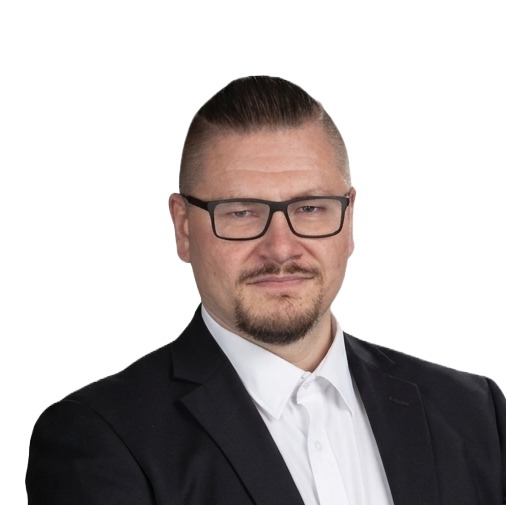
Markku Arvekari
Digital Transformation Expert