As we reach the final installment in our series on greenfield IT projects, it’s crucial to look ahead at the trends shaping the future of these initiatives. Greenfield IT projects have the potential to not only drive innovation but also to align with the growing global emphasis on sustainability. As businesses seek to thrive in an increasingly digital and environmentally conscious world, integrating sustainable practices into greenfield IT projects will be essential for long-term growth and competitiveness.
Emerging Trends in Greenfield IT Projects
-
AI and Automation: Transforming Efficiency and Responsiveness
Artificial Intelligence (AI) and automation are becoming central to greenfield IT projects, enhancing both the efficiency and responsiveness of these initiatives. AI can optimize processes, reduce manual intervention, and enable predictive analytics, allowing companies to anticipate and respond to market changes swiftly. Automation, on the other hand, streamlines workflows, reduces errors, and accelerates project timelines.
-
Sustainable IT Practices: The Future of Responsible Innovation
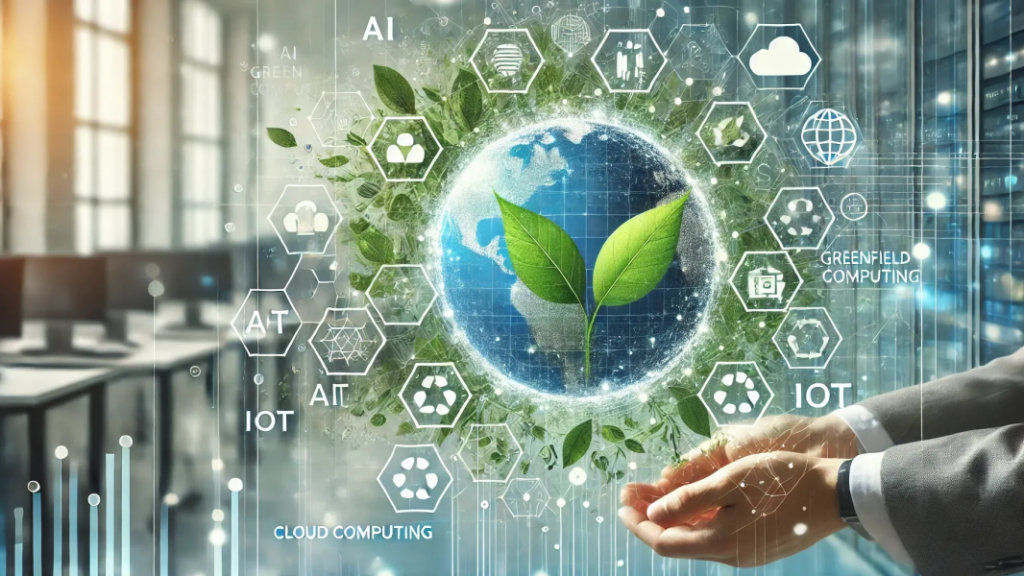
Sustainability is no longer a buzzword; it’s a business imperative. Greenfield IT projects offer a unique opportunity to design systems with sustainability at their core. This includes energy-efficient data centers, the use of renewable energy sources, carbon-neutral cloud services, and eco-friendly software development practices.
-
Edge Computing and IoT: Enhancing Real-Time Processing and Efficiency
Edge computing and the Internet of Things (IoT) are increasingly pivotal in greenfield IT projects. These technologies enable real-time data processing closer to the data source, reducing latency and improving the efficiency of IT systems. This is particularly important in sectors like manufacturing, healthcare, and logistics, where real-time decision-making is critical.
-
Sustainability as a Core Value in Greenfield Projects
Sustainability is becoming a core value in the design and execution of greenfield IT projects. This includes adopting circular economy principles, where resources are reused and recycled to minimize waste, and implementing green software engineering practices that focus on reducing the environmental footprint of software development.
-
Case Examples of Sustainable IT Practices
Several leading companies have successfully integrated sustainable practices into their greenfield IT projects:
-
Google: Google has committed to operating all of its data centers on carbon-free energy by 2030. Their approach to green IT includes using AI to optimize energy use in data centers, reducing overall energy consumption and contributing to their sustainability goals.
-
Microsoft: Microsoft is pushing the boundaries of sustainable IT with its goal to become carbon negative by 2030. This includes designing data centers that use 100% renewable energy and exploring new technologies like liquid immersion cooling to reduce energy usage.
Conclusion: Embracing the Future with Greenfield IT
The future of greenfield IT projects lies in their ability to incorporate emerging technologies and sustainable practices that drive long-term business growth. By focusing on AI, automation, edge computing, IoT, and sustainability, companies can build IT systems that are not only innovative and efficient but also environmentally responsible.
As businesses continue to evolve, those that integrate these trends into their greenfield IT projects will be better positioned to thrive in an increasingly competitive and sustainability-conscious market. Greenfield IT is not just about building new systems—it’s about building a better future.

Markku Arvekari
Digital Transformation Expert