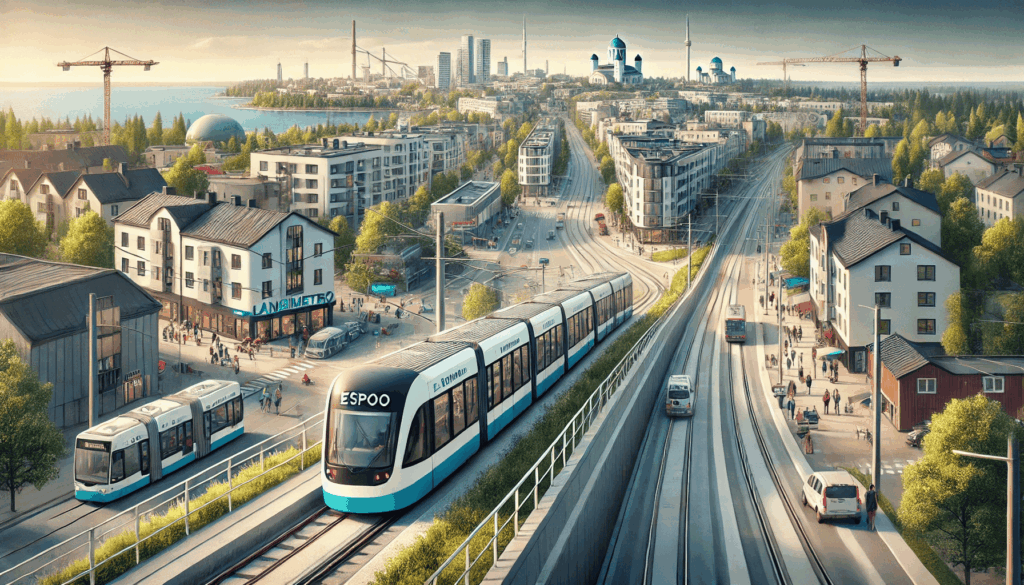

In Espoo’s transport system, strong investments have been made in public transport in recent years, especially in Länsimetro and its extensions. The metro is a good solution for travel between the city’s major centres, but at the same time a significant mistake has been made: public transport has become too concentrated around metro stations. In practice, this solution has left many Espoo residents completely without a realistic public transport option when commuting and errands are headed somewhere other than along the metro line.
Espoo’s urban structure is fragmented, and public transport connections in outlying areas are currently inadequate. The situation has worsened even further as bus services have been cut heavily with the arrival of the metro. Evening, night and weekend services are almost non-existent, forcing residents to use their own cars—not out of ideology, but out of everyday necessity.
In addition, the special audit concerning Länsimetro Oy’s operations has still not been carried out, even though it has been demanded repeatedly. Residents deserve to know how tax money has been used and how decisions on building the metro and its extensions were made. Transparency is important in public projects so that residents can trust that their money is being used responsibly.
Driving should not be made artificially more difficult
Although promoting public transport is important, private motoring should not be seen as the enemy. In Espoo, the constant raising of parking fees, the expansion of paid zones and traffic restrictions do not serve the overall picture. The city is growing continuously, which also increases the need for private motoring—this fact cannot be ignored.
People should not be punished because public transport does not meet their needs. On the contrary, Espoo must find a sensible balance between different modes of travel and ensure that driving is also a sensible and smooth option.
We need solutions that actually work
More resources must be allocated to Espoo’s public transport so that it serves all Espoo residents also in the evenings, at night and on weekends. Public transport must be a genuinely competitive option, not merely a political value choice. This means better connections and shorter travel times for all areas—including outside the city centres.
In decision-making, residents and entrepreneurs must finally be listened to, not only civil servants and those who draft political guidelines. Espoo residents need practical, efficient and genuinely workable solutions, not ideological diktats. It is time to return to common sense in Espoo’s transport and listen to local residents.
Sustainable transport is built on smoothness and freedom of choice, not coercion.
Source: Uusi Suomi
Markku Arvekari
Digital Transformation Expert