Introduction: Charting a Sustainable Course in Datacenters As the digital world grows, so does the need for sustainable solutions in datacenters. In this pursuit, Data Center Infrastructure Management (DCIM) and Artificial Intelligence (AI) emerge as key allies, tackling the challenge of escalating energy consumption head-on.
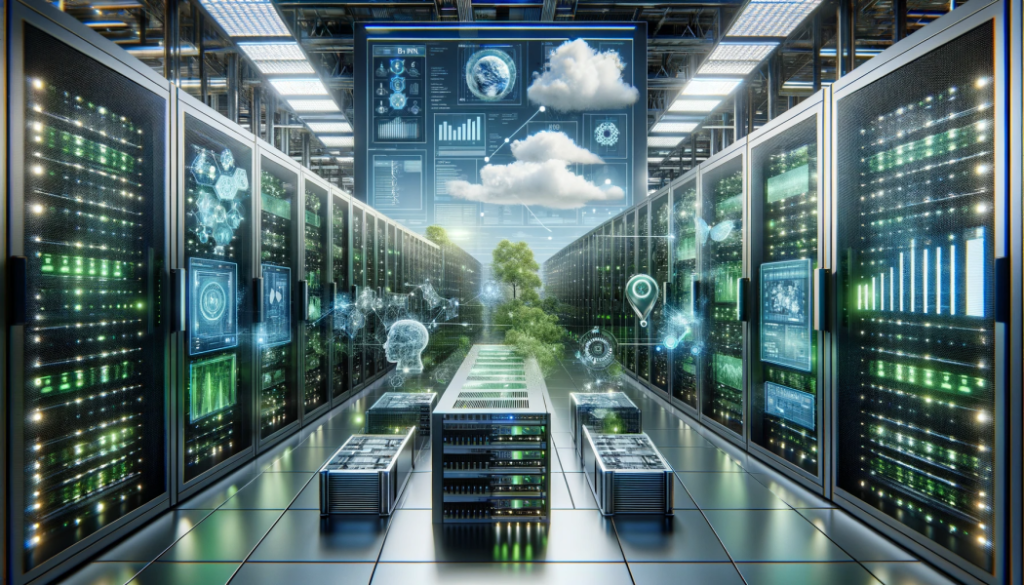
DCIM: The Strategic Command Center DCIM stands at the core of modern datacenters, acting much like the central nervous system. It offers a detailed view of all datacenter assets, from servers to HVAC systems, and their energy use. This level of insight is vital for pinpointing inefficiencies and setting the stage for effective energy management.
AI: Elevating DCIM with Predictive Intelligence The integration of AI with DCIM marks the evolution from reactive to proactive energy management. AI brings a layer of predictive intelligence, enabling datacenters to foresee and adjust to varying workloads and conditions autonomously. It’s like having a smart assistant that not only understands the present state but can also predict future scenarios, optimizing energy use in real-time.
Bridging with Digital Twins: A Comprehensive Model Linking back to our discussion on digital twins, these virtual replicas can enhance AI and DCIM systems. By feeding real-time data from digital twins into AI algorithms, datacenters gain a more dynamic and accurate model for energy optimization. The digital twin becomes a living laboratory, where AI tests and implements energy-saving strategies in a simulated environment before deploying them in the real world.
Success Stories: AI-Driven DCIM Making Waves The practical impact of AI-enhanced DCIM is evident in numerous case studies. For instance, by leveraging AI to analyze and adjust cooling systems, datacenters have realized significant energy reductions. These systems dynamically balance cooling needs against operational requirements, ensuring optimal performance with minimal energy expenditure.
Conclusion: Steering Towards Energy-Efficient Datacenters with AI and DCIM
The integration of AI and DCIM represents a significant leap forward in our journey towards more sustainable and energy-efficient datacenters. As we continue to embrace these advancements, here are three key advisory tips for those looking to optimize their datacenter operations:
-
Leverage Data for Insightful Decision Making: Utilize the comprehensive data provided by DCIM systems to gain a deep understanding of your datacenter’s energy usage. This data, combined with AI’s predictive analytics, can identify areas of inefficiency and potential improvements.
-
Invest in AI-Driven Optimization: Implement AI algorithms that can dynamically adjust operations in response to changing conditions. This includes optimizing cooling systems, power distribution, and workload management, ensuring that your datacenter operates at peak efficiency.
-
Adopt a Holistic Approach with Digital Twins: Integrate digital twins to create a complete model of your datacenter. This approach allows you to simulate and test various energy-saving strategies, providing a risk-free environment to evaluate the potential impact before actual implementation.
As we forge ahead in the digital age, the role of AI and DCIM in shaping sustainable datacenters is becoming increasingly crucial. These technologies are not just about improving operations; they’re about redefining how we approach energy efficiency and sustainability in the digital infrastructure realm.
How are you integrating AI and DCIM in your datacenter operations? What strategies have you found most effective in enhancing energy efficiency? Join the discussion and share your experiences as we collectively navigate towards a greener, more efficient future in datacenter technology.

Markku Arvekari
Digital Transformation Expert