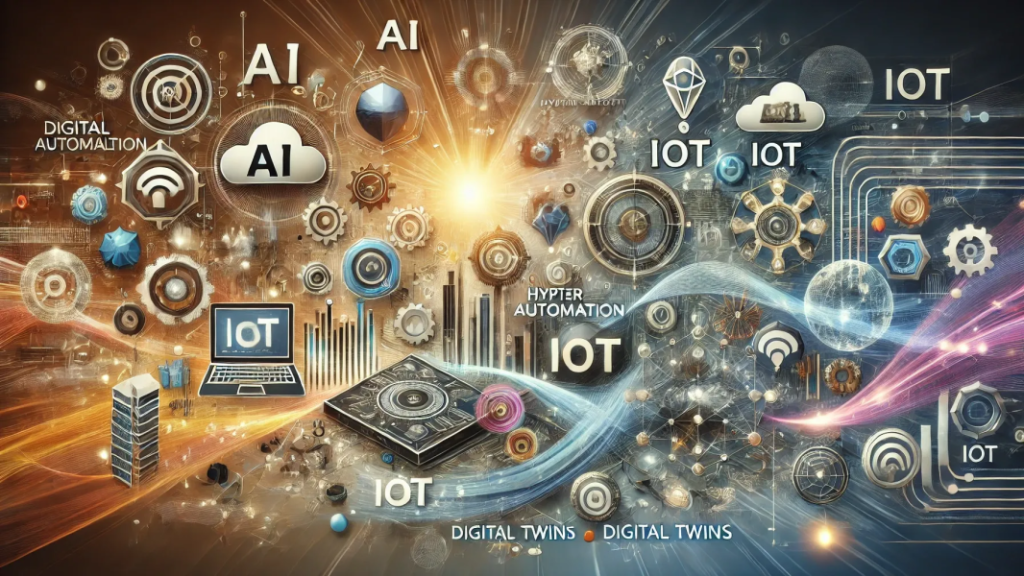
Nopeatempoisessa teknologiamaailmassa kehityksen kärjessä pysyminen on olennaista kilpailuedun säilyttämiseksi. Greenfield IT -projektit, jotka mahdollistavat yrityksille aloittamisen puhtaalta pöydältä, tarjoavat ainutlaatuisen mahdollisuuden ottaa käyttöön uusimmat ja innovatiivisimmat teknologiat heti alusta alkaen. Hyödyntämällä sekä vakiintuneita että nousevia teknologioita organisaatiot voivat luoda ratkaisuja, jotka eivät ole ainoastaan huipputasoa, vaan myös linjassa tulevien trendien kanssa. Tässä artikkelissa tarkastellaan, miten tasapainoinen yhdistelmä teknologioita, kuten AI, IoT, hyperautomaation, digitaaliset kaksoset ja lisätty todellisuus, voidaan integroida greenfield-projekteihin innovoinnin ja liiketoiminnan kasvun vauhdittamiseksi.
Miksi nousevat teknologiat ovat tärkeitä greenfield-projekteissa
Vakiintuneiden ja uudempien teknologioiden yhdistelmään keskittyminen tarjoaa merkittäviä etuja greenfield-projekteissa:
-
Innovaatio: Perinteisten ja huipputason teknologioiden yhdistäminen mahdollistaa kehittyneiden ratkaisujen luomisen, jotka voivat erottaa yrityksen kilpailijoistaan.
-
Skaalautuvuus: Monet näistä teknologioista on suunniteltu skaalautuvuus mielessä, mikä varmistaa, että ratkaisut voivat kasvaa liiketoiminnan mukana.
-
Tehokkuus: Automaatioteknologiat voivat vähentää manuaalisia prosesseja dramaattisesti, lisätä tehokkuutta ja pienentää operatiivisia kustannuksia.
-
Ketteryyys: Teknologiat kuten hyperautomaation ja reunalaskennan mahdollistavat yrityksille nopean sopeutumisen markkina- tai liiketoimintaympäristön muutoksiin.
-
Parannettu käyttäjäkokemus: Vuorovaikutteisten teknologioiden, kuten lisätyn todellisuuden, sisällyttäminen voi merkittävästi parantaa asiakasosallistumista ja -tyytyväisyyttä.
Keskeiset nousevat teknologiat, joita kannattaa harkita
Artificial Intelligence (AI), Machine Learning (ML) ja Generative AI (GenAI):
AI ja ML ovat edelleen teknologisen innovaation eturintamassa, mahdollistaen järjestelmille oppimisen ja ajan myötä mukautumisen, tarjoten personoituja kokemuksia ja optimoiden toimintoja. Greenfield-projekteissa AI:ta voidaan hyödyntää älykkäiden automaatiojärjestelmien, ennakoivan analytiikan ja asiakasvuorovaikutusmallien kehittämiseen.
Generative AI (GenAI) vie AI:n kyvykkyydet pidemmälle tuottamalla uutta sisältöä, kuten tekstiä, kuvia tai koodia, syöttödatan perusteella. Esimerkiksi GenAI voi automatisoida markkinointisisällön tuottamisen, luoda synteettistä dataa ML-mallien kouluttamiseen tai auttaa uusien tuotteiden ja palveluiden suunnittelussa. GenAI:n integrointi greenfield-projekteihin voi johtaa erittäin innovatiivisiin ja tehokkaisiin ratkaisuihin eri toimialueilla.
Hyperautomaation:
Hyperautomaation yhdistää useita teknologioita, mukaan lukien Robotic Process Automation (RPA), AI, ML ja edistynyt analytiikka, automatisoidakseen monimutkaisia liiketoimintaprosesseja kokonaisvaltaisesti. Greenfield-projekteissa hyperautomaation voi tehostaa operaatioita seuraavasti:
-
Päästä päähän -prosessien automatisointi: Tehtävien käynnistämisestä niiden loppuunsaattamiseen ilman ihmisen väliintuloa, mikä lisää nopeutta ja vähentää virheitä.
-
Päätöksenteon parantaminen: AI:n ja ML:n hyödyntäminen datan analysointiin ja perusteltujen päätösten tekemiseen reaaliajassa.
-
Skaalautuvuuden parantaminen: Automaattisten prosessien helppo skaalaaminen liiketoiminnan kasvaessa tai vaatimusten vaihdellessa.
-
Kustannusten vähentäminen: Manuaalisen työn ja siihen liittyvien kulujen minimointi tehokkaan prosessiautomaation avulla.
Upottamalla hyperautomaation uusien järjestelmien perustaan organisaatiot voivat saavuttaa vertaansa vailla olevan tehokkuuden ja mukautumiskyvyn toiminnassaan.
Internet of Things (IoT):
IoT yhdistää fyysiset laitteet internetiin, mahdollistaen reaaliaikaisen datankeruun ja automaation. Greenfield-projekteissa IoT voidaan integroida älykkäisiin ympäristöihin, kuten tuotantolaitoksiin, terveydenhuollon yksiköihin tai kaupunki-infrastruktuuriin, operaatioiden optimoimiseksi ja tehokkuuden parantamiseksi.
Käyttötapauksia ovat:
-
Älykäs valmistus: Laitteiden suorituskyvyn seuranta ja huoltotarpeiden ennustaminen käyttökatkosten ehkäisemiseksi.
-
Terveydenhuollon seuranta: Potilaan elintoimintojen etäseuranta oikea-aikaisia toimenpiteitä varten.
-
Älykaupungit: Energian ja veden kaltaisten resurssien tehokkaampi hallinta yhteenliitetyn infrastruktuurin avulla.
Reunalaskenta:
Reunalaskenta käsittelee dataa lähempänä sen syntypaikkaa, mikä vähentää viivettä ja kaistanleveyden käyttöä. Greenfield-projekteissa reunalaskenta on erityisen hyödyllistä tilanteissa, joissa reaaliaikainen käsittely on kriittistä.
Hyötyjä ovat:
-
Parantuneet vasteajat: Olennaista sovelluksille kuten autonomiset ajoneuvot ja reaaliaikainen analytiikka.
-
Parannettu turvallisuus: Arkaluonteisen datan pitäminen paikallisena vähentää altistumisriskejä, jotka liittyvät datan siirtämiseen verkkojen yli.
-
Pienemmät operatiiviset kustannukset: Laajan pilvi-infrastruktuurin tarpeen vähentäminen käsittelemällä dataa paikallisesti.
Digitaaliset kaksoset:
Digitaalinen kaksonen on fyysisen objektin, järjestelmän tai prosessin virtuaalinen replika, jota käytetään todellisten skenaarioiden simulointiin, analysointiin ja optimointiin.
Sovellukset greenfield-projekteissa:
-
Tuotekehitys: Tuotteen suorituskyvyn simulointi erilaisissa olosuhteissa ennen fyysistä tuotantoa.
-
Järjestelmän optimointi: Operatiivisen tehokkuuden jatkuva seuranta ja parantaminen toimialoilla kuten valmistus ja energia.
-
Ennakoiva kunnossapito: Ongelmiin varautuminen ja niiden ratkaiseminen ennen niiden ilmenemistä analysoimalla digitaalisen kaksosen dataa.
Lisätty todellisuus (AR):
AR asettaa digitaalista informaatiota fyysisen maailman päälle, parantaen käyttäjän havainnointia ja vuorovaikutusta ympäristönsä kanssa. Greenfield-projekteissa AR:ää voidaan hyödyntää immersiivisten ja vuorovaikutteisten kokemusten luomiseen.
Mahdollisia käyttökohteita:
-
Koulutus ja opetus: Vuorovaikutteisten oppimiskokemusten tarjoaminen työntekijöille tai asiakkaille.
-
Tuotevisualisointi: Asiakkaiden mahdollistaminen kokea tuotteet virtuaalisesti ennen ostoa, mikä parantaa sitoutumista ja vähentää palautusprosentteja.
-
Huolto ja korjaus: Teknikoiden avustaminen asettamalla ohjeet ja diagnostiikka suoraan laitteiston päälle.
Edistynyt data-analytiikka:
Edistynyt data-analytiikka sisältää kehittyneitä menetelmiä, kuten ennakoivan analytiikan, reaaliaikaisen käsittelyn ja big data -analyysin, jotta monimutkaisista aineistoista voidaan tuottaa toiminnallisia oivalluksia.
Vaikutus greenfield-projekteihin:
-
Perusteltu päätöksenteko: Mahdollistaa dataohjautuvat strategiat eri liiketoimintatoiminnoissa.
-
Asiakasymmärrys: Asiakaskäyttäytymisen ja -mieltymysten ymmärtäminen palveluiden ja tuotteiden tehokasta räätälöintiä varten.
-
Operatiivinen tehokkuus: Prosessien tehottomuuksien tunnistaminen ja korjaaminen kattavan data-analyysin avulla.
Strategiat nousevien teknologioiden integroimiseksi
-
Laadi kattava teknologiatiekartta:
Luo yksityiskohtainen suunnitelma eri teknologioiden integroinnista, varmistaen linjauksen yleisten liiketoimintatavoitteiden kanssa ja skaalautuvuuden tulevaa kasvua varten.
-
Omaksu modulaarinen ja joustava arkkitehtuuri:
Suunnittele järjestelmät modulaarisista komponenteista, jotta eri teknologioiden integrointi ja päivitykset ovat helppoja niiden kehittyessä.
-
Panosta osaamisen kehittämiseen ja koulutukseen:
Varmista työvoimasi tarvitsemat taidot näiden teknologioiden tehokkaaseen hyödyntämiseen jatkuvien oppimis- ja kehitysohjelmien kautta.
-
Osallistu strategisiin kumppanuuksiin:
Tee yhteistyötä teknologiatoimittajien, startup-yritysten ja tutkimuslaitosten kanssa saadaksesi osaamista, jakaaksesi riskejä ja kiihdyttääksesi innovointia.
-
Toteuta vahvat turvallisuus- ja vaatimustenmukaisuustoimenpiteet:
Varmista, että kaikki teknologiset integraatiot noudattavat toimialastandardeja ja sääntelyä, ja että käytössä on vahvat tietoturvaprotokollat datan suojaamiseksi ja luottamuksen ylläpitämiseksi.
-
Toteuta pilottiprojekteja ja proof of concept -hankkeita (PoC):
Testaa uusia teknologioita pienemmässä mittakaavassa arvioidaksesi toteutettavuutta, kerätäksesi palautetta ja tehdäksesi tarvittavat muutokset ennen täysimittaista käyttöönottoa.
Yhteenveto: Tulevaisuuden omaksuminen greenfield-projektien avulla
Harkitun yhdistelmän hyödyntäminen vakiintuneita ja nousevia teknologioita greenfield IT -projekteissa tarjoaa yrityksille vertaansa vailla olevia mahdollisuuksia innovoida ja rakentaa kestäviä, tulevaisuusvalmiita järjestelmiä. Integroimalla teknologioita kuten AI, GenAI, hyperautomaation, IoT, reunalaskenta, digitaaliset kaksoset ja lisätty todellisuus organisaatiot voivat luoda ratkaisuja, jotka eivät ainoastaan vastaa nykyisiin haasteisiin, vaan myös asemoivat ne kestävään menestykseen jatkuvasti kehittyvässä digitaalisessa toimintaympäristössä.
Markku Arvekari
Digital Transformation Expert